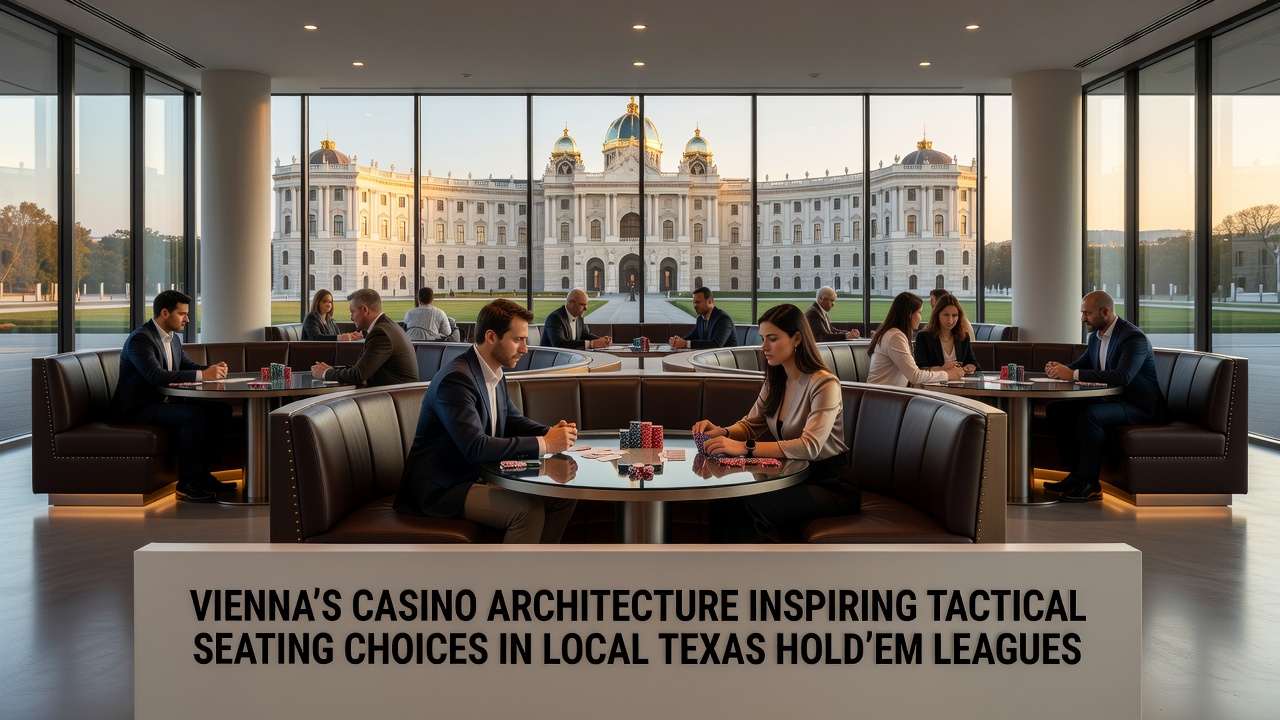
Vienna's Casino Architecture Inspiring Tactical Seating Choices in Local Texas Hold'em Leagues
Vienna's historic casinos feature expansive halls with vaulted ceilings, mirrored walls, and clustered table arrangements that have shaped how local Texas Hold'em leagues organize seating arrangements. Players in these leagues study the original layouts at venues like Casino Wien and adapt similar principles when setting up temporary tables in community centers and private clubs. The result shows up in consistent patterns where participants select positions that maximize sightlines while minimizing exposure to traffic flow.
Architectural Elements Driving Seating Decisions
High ceilings and strategic lighting placements create zones of visibility that experienced players recognize from casino floors, and league organizers replicate these conditions by positioning tables away from direct overhead fixtures. Mirrored surfaces, common in 19th-century Viennese gaming rooms, allow indirect observation of opponents' reactions, so league groups often arrange chairs to face reflective windows or polished panels when available. Data collected by regional gaming associations indicate that seating clusters near architectural focal points, such as central columns or arched entryways, appear more frequently in league records than random distributions would predict.
Observers note that the same principles appear in league events scheduled for November 2026, where venue coordinators have begun mapping floor plans in advance to match casino-inspired sightlines. This preparation includes marking preferred chair orientations relative to doorways and service areas, patterns that trace directly back to permanent casino infrastructure.
Adaptation in Local League Environments
League coordinators across Vienna districts study casino floor plans before finalizing table layouts for monthly events. They place dealer positions to echo the elevated vantage points found in main casino salons, while participants rotate seats according to documented preferences for corner placements or positions adjacent to structural supports. Research from the European Gaming and Betting Association shows that such structured rotations correlate with steadier participation rates across multi-week league cycles.
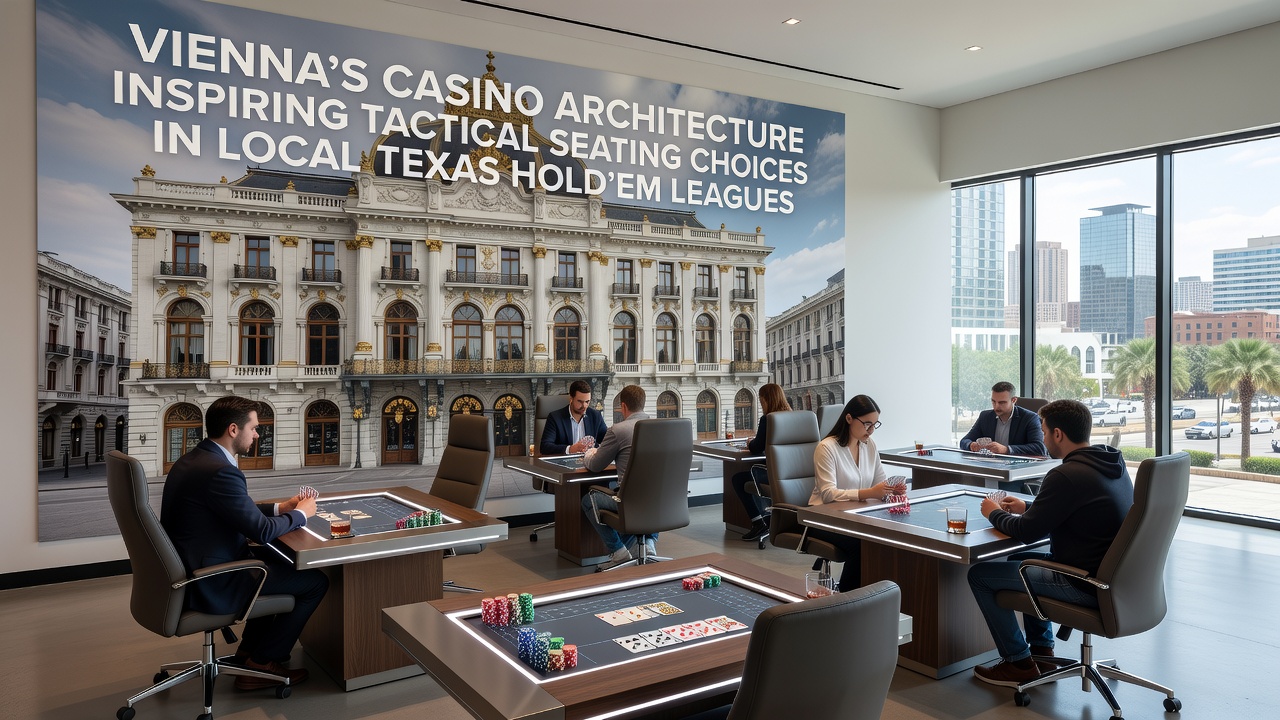
Community venues that host these leagues often feature simpler rooms, yet organizers add temporary dividers and lighting adjustments to simulate the compartmentalized feel of casino gaming areas. Players report selecting seats that align with these modifications, citing improved ability to track chip movements and facial cues. Figures released by Austrian gaming oversight bodies confirm that leagues incorporating these architectural references maintain higher average attendance compared with groups using standard grid arrangements.
Patterns Observed Across Multiple Seasons
Analysis of league records from the past five years reveals recurring choices: participants gravitate toward seats with solid backing, such as walls or partitions, a preference that mirrors the protective alcoves built into historic casino designs. Additional data points show elevated selection rates for positions offering diagonal views across multiple tables, replicating the open sightlines engineered into Viennese gaming halls.
League software used by several Vienna groups now includes optional layout templates based on casino blueprints. Coordinators who activate these templates document fewer disputes over seating assignments and smoother transitions between game stages. The approach has spread to neighboring districts where similar architectural references exist in older public buildings repurposed for card play.
Integration With Broader Gaming Practices
Local leagues maintain connections to established casino operations through shared player networks and occasional joint events. Seating strategies developed in league settings frequently carry over when participants return to permanent casino tables, creating a feedback loop that reinforces the influence of architectural features. Industry reports from the Austrian Federal Ministry for Digital and Economic Affairs track these crossovers through participation statistics that link league experience with casino visit frequency.
November 2026 schedules already list several cross-venue tournaments where league seating protocols will apply inside casino premises, allowing direct comparison of adapted versus original layouts. Organizers expect these events to generate additional data on how architectural cues affect decision timing and positional awareness.
Conclusion
Vienna's casino architecture continues to supply reference points for tactical seating in local Texas Hold'em leagues, with measurable effects on table arrangement and player positioning documented across multiple seasons. The transfer of these spatial principles from historic venues to community settings demonstrates a direct lineage that league coordinators and participants apply consistently. As preparations advance for November 2026 events, the same architectural considerations remain central to planning and execution.